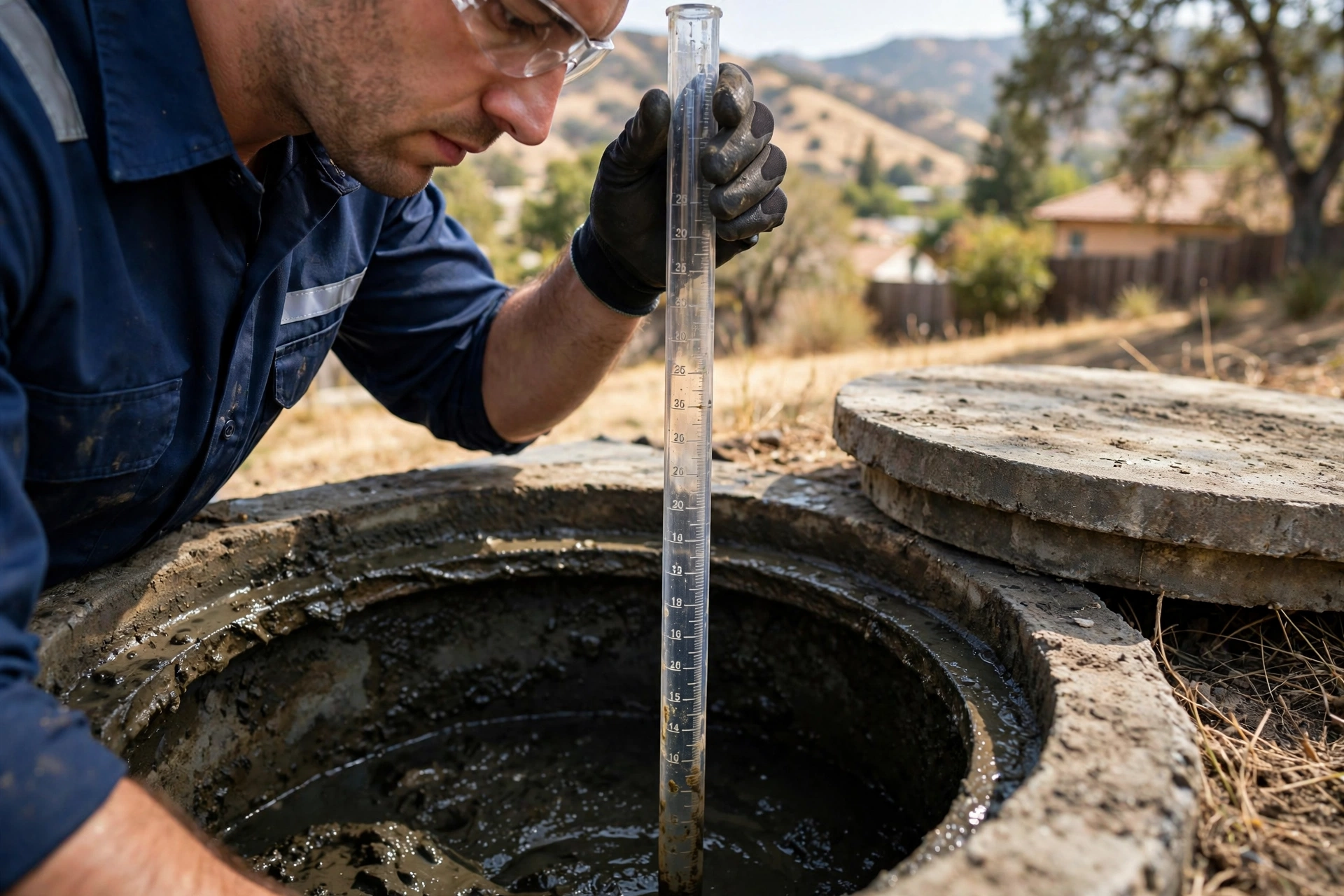
The drain field is the part of your septic system that actually treats wastewater — and the part most homeowners never think about until it's failing. When the field fails, effluent surfaces in the yard, toilets back up, and the whole system stops working. A failed field is the most expensive septic problem there is, which is exactly why it deserves a proper diagnosis before anyone talks replacement.
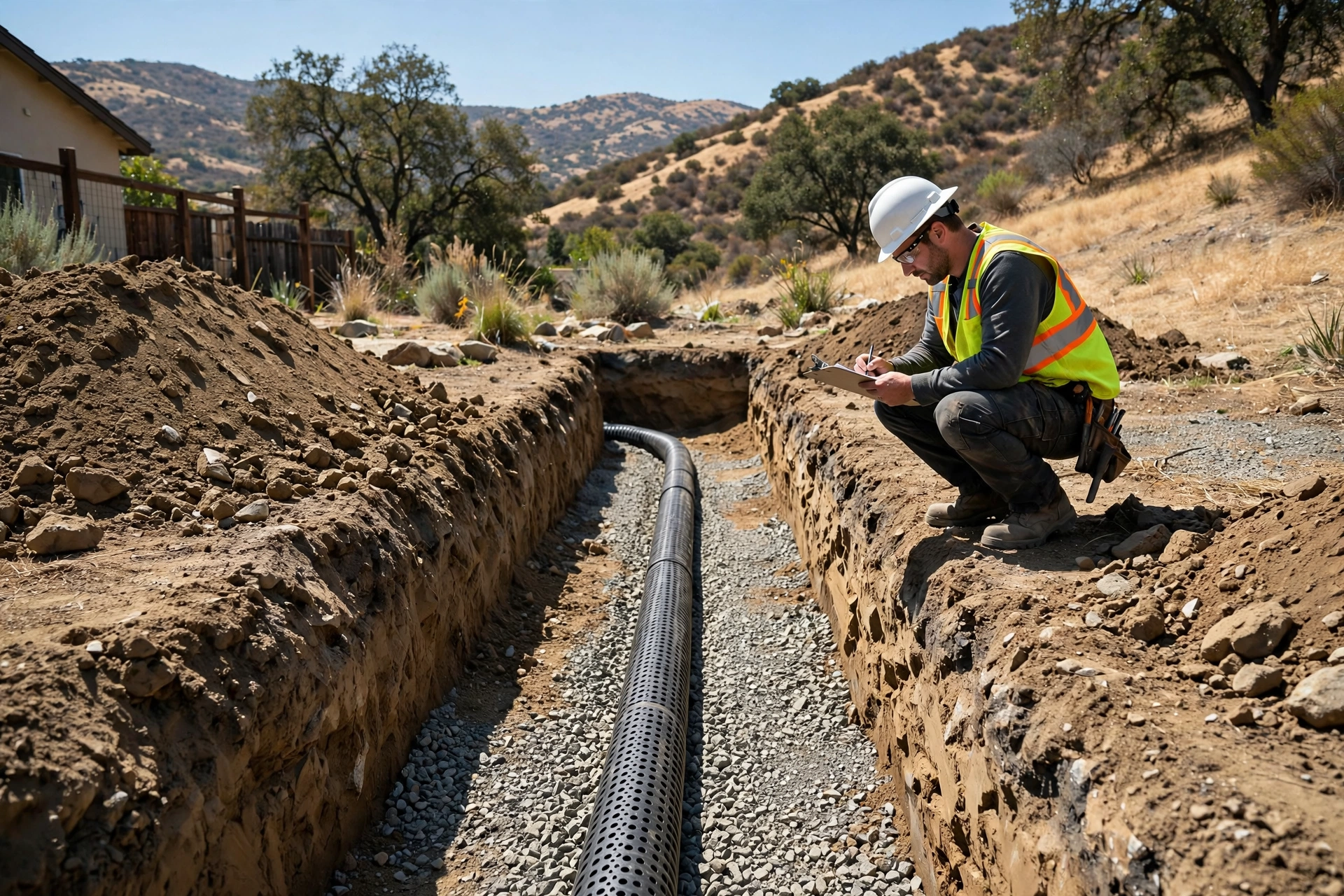
Our drain field work starts with a field evaluation: we map the field, check for biomat buildup, test soil absorption, and determine whether the field can be rehabilitated or needs replacement. Some fields recover with rest and treatment; others are done. We tell you which yours is and what the county will permit for your lot.
If your yard is wet over the field, if you smell sewage outside, or if the tank keeps filling too fast — call. Drain field problems only move in one direction, and the fix gets harder and more expensive the longer the field sits overloaded.
Signs your drain field is failing
- Standing water or soggy ground over the drain field area
- Sewage odor in the yard that comes and goes
- Bright green, fast-growing grass stripes over the field lines
- Toilets back up even when the tank was recently pumped
- Effluent visibly surfacing or running off on a slope
- The tank refills to the top within days of pumping
How we evaluate and repair drain fields
1 Map and test the field
We locate the field lines, probe their condition, and assess how much of the field is still absorbing. This tells us whether we're looking at a localized problem or a field-wide failure — two very different jobs.
2 Find the cause
Fields fail for reasons: years of solids escaping an unmaintained tank, biomat sealing the trench walls, root intrusion, or soil that was marginal to begin with. The cause determines whether rehabilitation has a chance.
3 Rehabilitate when possible
When a field is partially failed, options can include resting sections, treating biomat, replacing broken distribution components, or adding field area where the lot allows. We pursue repair first when the field earns it.
4 Plan replacement honestly
When a field is done, we lay out what replacement looks like for your specific lot — engineered design for the soil, county permits, and realistic expectations. No field can be revived by wishing, and we won't pretend otherwise.
Why Monrovia drain fields fail the way they do
Monrovia's foothill drain fields face a triple challenge most flat-land systems don't. First, decomposed-granite soils perc poorly — effluent moves through slowly, which means fields here clog faster under the same household load. Second, slopes change everything: effluent migrates downhill within the field, overloading the lowest trenches while the upper ones do nothing, and surfacing on a slope is visible to neighbors and the county in a way flat-lot seepage isn't. Third, decades of hillside runoff carry sediment into aging trenches, accelerating biomat. Add years of skipped pumpings sending solids downstream, and you get the classic foothill failure: a field that worked for 40 years and then quits in one wet winter.
Need drain field repair in Monrovia?
One call connects you with a local technician. No forms, no waiting.