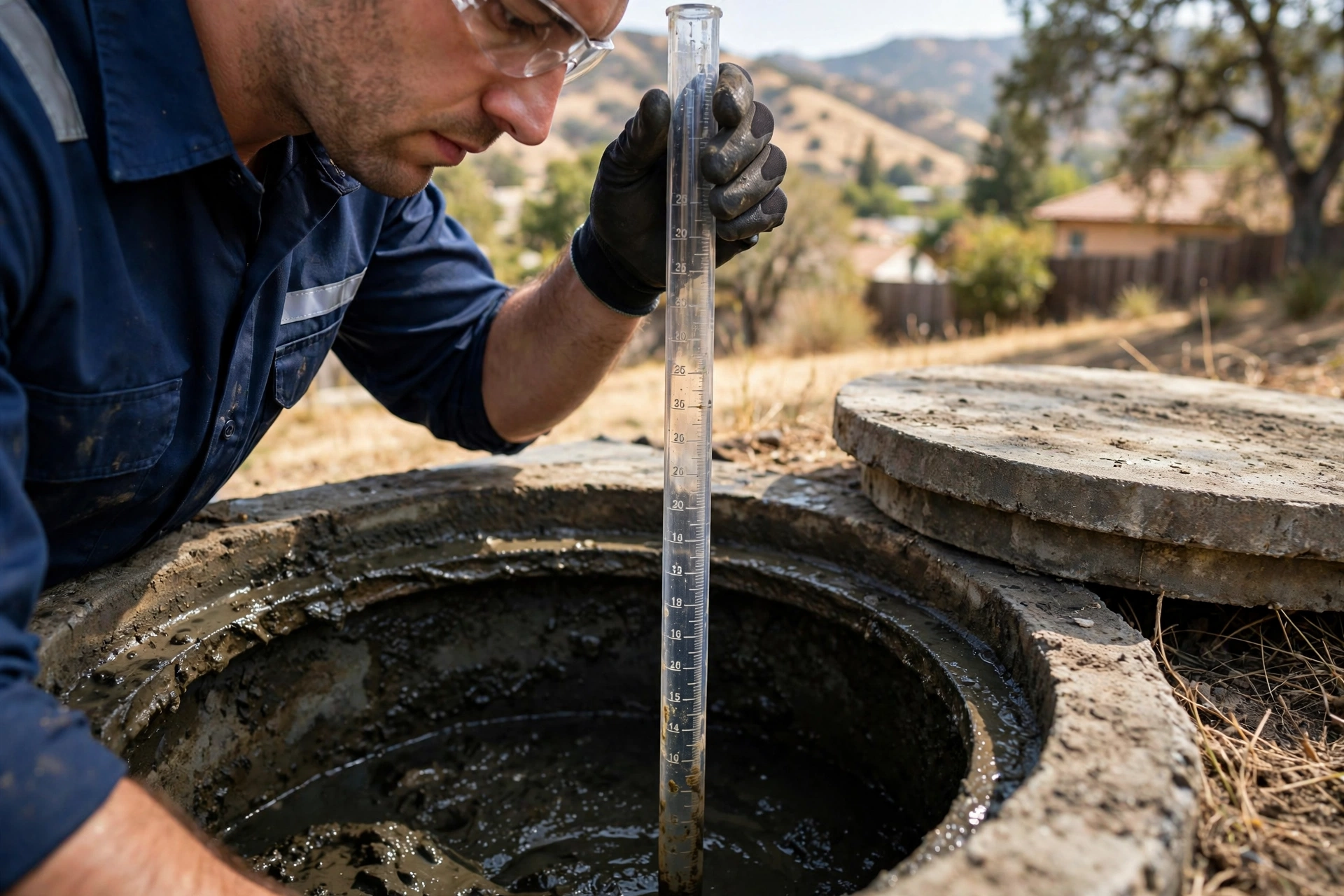
A septic inspection is the only way to know what you're actually buying — or living with. Tanks are buried, drain fields are invisible, and most systems fail quietly for years before the first backup. An inspection puts eyes on the whole system: the tank's condition, the baffles, the drain field's health, and whether the system matches the home's current use.
Our inspections cover the full system end to end. We open the tank, measure solids, check the structural condition of the tank and lid, test the outlet and baffles, and evaluate the drain field for signs of failure or overload. You get a written report with what we found, what's fine, and what needs attention — in plain language, not contractor jargon.
This is the right call before buying a home on septic, before selling one (buyers ask, and surprises kill deals), or if you've lived in the house for years and want to know where things stand. An inspection is the simplest way to turn an unknown buried system into a known one.
When to get a septic inspection
- You're buying a home in Monrovia and the listing says 'septic' — or says nothing at all
- The home has changed hands recently and nobody knows when the tank was last serviced
- You've lived there for years and have no record of the system's condition
- You're selling and want to remove septic as an objection before listing
- You smell sewage outside but the tank was pumped recently
- Your household has grown and water use has increased since the system was designed
How we inspect your system
1 Locate every component
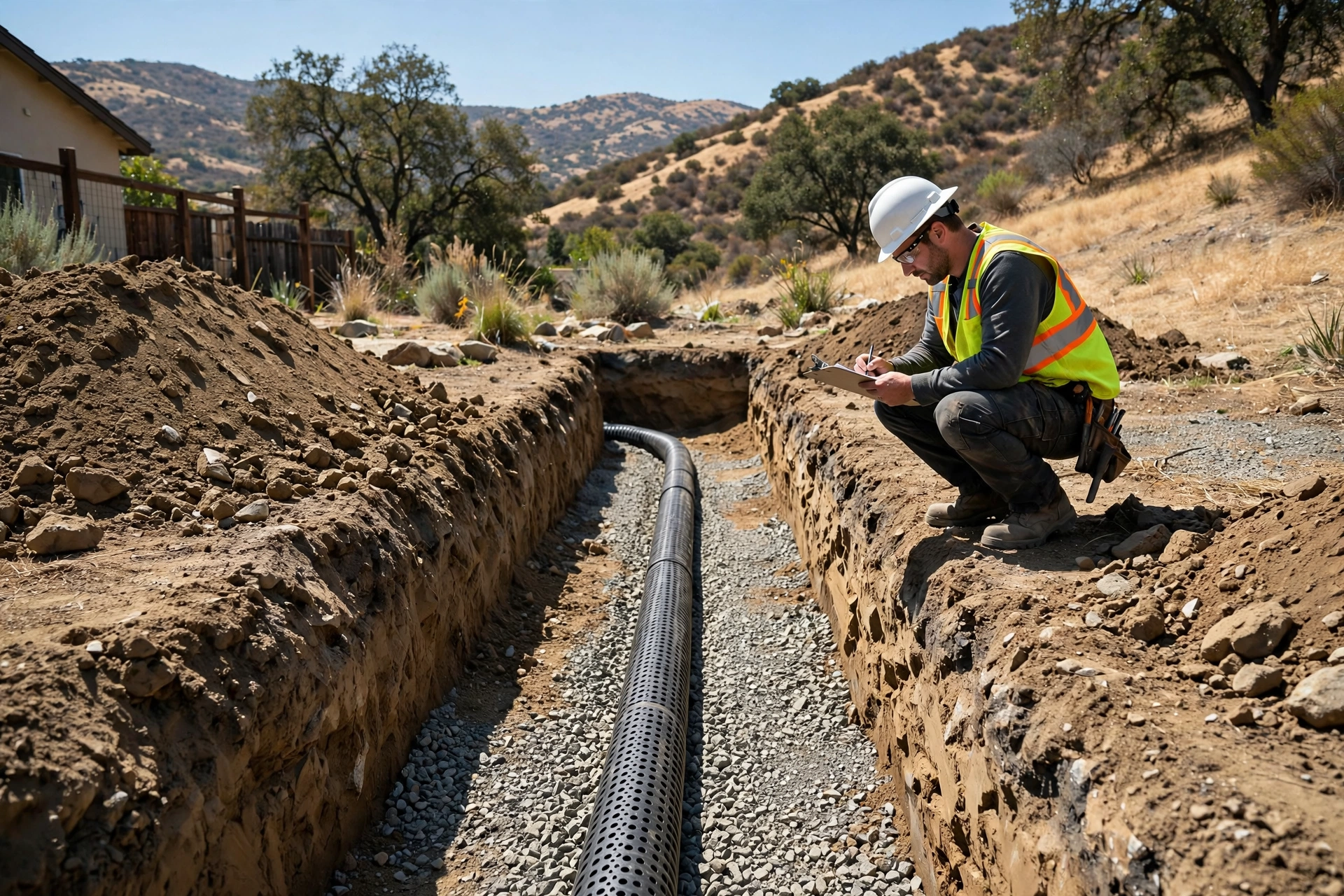
We map the full system — tank, distribution box, and drain field — using electronic locators and probing. On older foothill lots, county records are often wrong or missing, so we verify by finding the actual components in the ground.
2 Open and assess the tank
The tank is opened and evaluated: liquid level, sludge and scum measurements, structural condition of walls and lid, baffle integrity, and the outlet filter. A tank at the wrong liquid level tells us as much as anything else.
3 Evaluate the drain field
We walk the field looking for surfacing effluent, spongy soil, odors, and uneven vegetation growth — all visible signs of a field that's overloaded or failing. We also check whether the field is sized for the home's actual water use.
4 Written report
You get a written report with our findings, what's working, what needs attention, and what it means for the system long-term. Buyers get it for negotiations; homeowners get it for planning.
Inspections for Monrovia buyers
Monrovia's foothill homes change hands at premium prices, and a surprising number of buyers discover post-closing that their home is on septic — sometimes an original 1950s or 60s system. Escrow inspections in this market often skip the septic entirely because the general home inspector can't open a buried tank. We get called during escrow constantly, and we tell buyers what the inspection really says: not just whether the system works today, but whether it's sized for the home and how much life it has left. On hillside lots with engineered fields, we also verify that the field is actually the permitted one and not an unpermitted add-on from a prior owner.
Need septic inspection in Monrovia?
One call connects you with a local technician. No forms, no waiting.