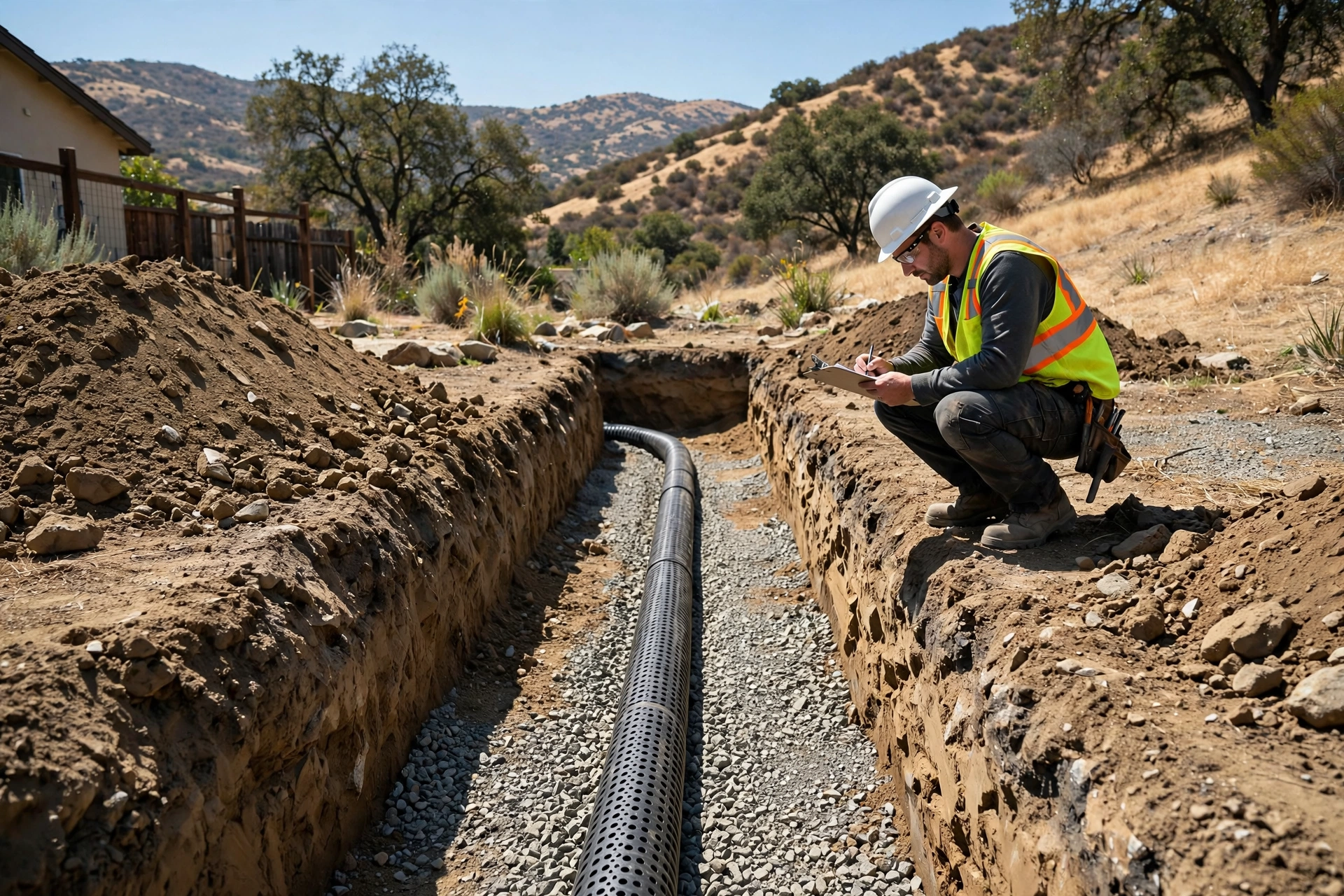
Some septic systems can't be repaired — a crumbling concrete tank, a fully failed drain field, or a 1960s steel tank rusting through from the inside. When the system is done, the question isn't whether to replace it, it's how to build the replacement right for the lot it's going on. Foothill lots punish shortcuts.
We handle full system installations: soil evaluation and design for your specific lot, LA County permits and engineered plans where required, excavation on slopes and tight hillside access, and a complete new tank and drain field built to current code. We also install risers to grade on every new tank, because the next pumper shouldn't have to dig for your lids.
If an inspection or evaluation says your system is done, or you're building on a lot that can't reach city sewer — call. We'll walk you through what your lot needs, what the county requires, and what the finished system looks like. No obligation beyond straight information.
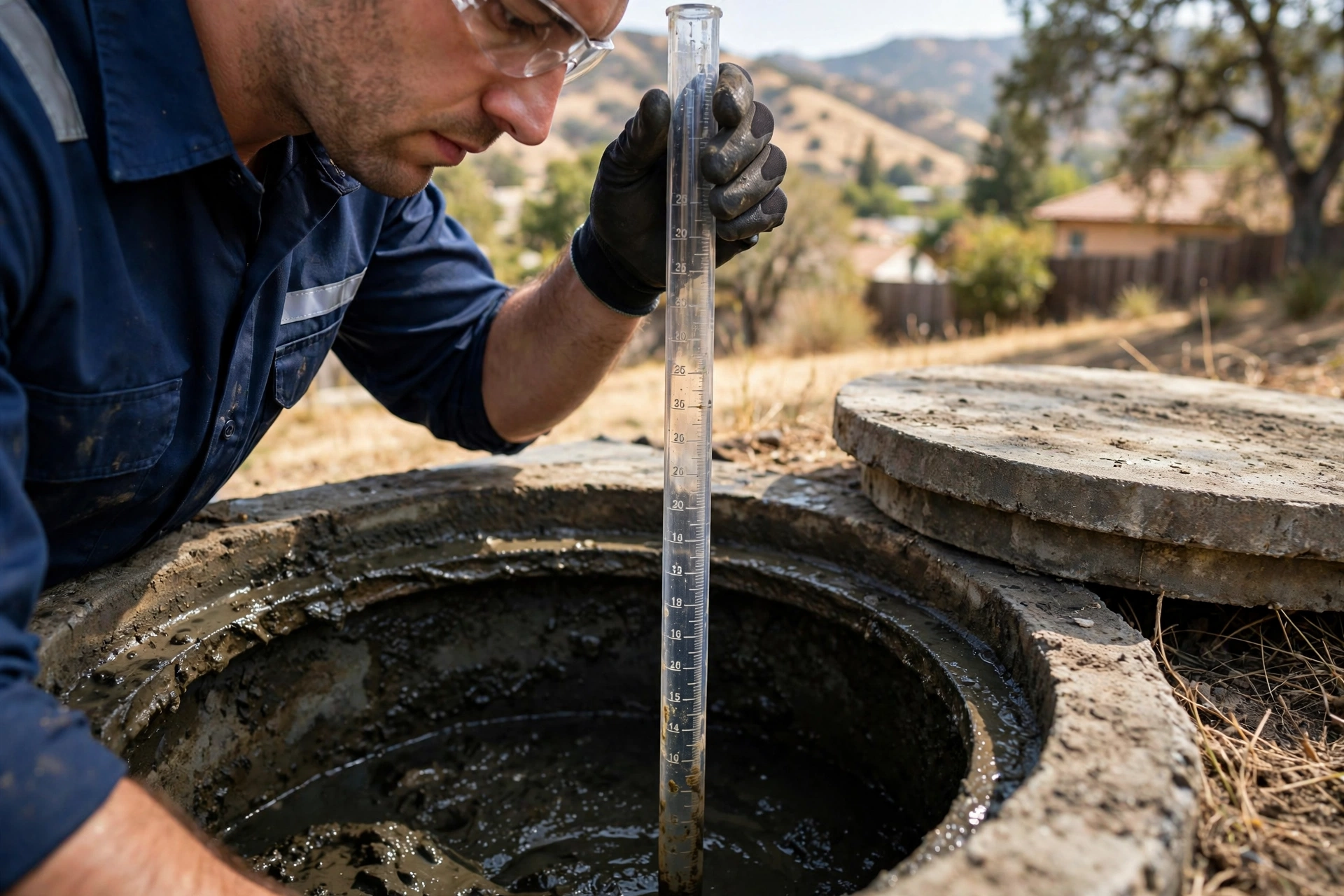
When replacement is the right call
- An inspection found the tank structurally failed — crumbling, collapsed, or leaking
- The drain field is fully failed and can't be rehabilitated
- A steel tank from the 50s or 60s is rusting through
- Repairs are stacking up to the cost of a new system
- You're building or adding bedrooms on a lot that can't connect to sewer
- The county requires system upgrades for a remodel or addition
How we install your new system
1 Soil and site evaluation
We evaluate the lot — soil type, depth to bedrock, slope, and available field area — and determine what kind of system the ground can actually support. Foothill lots often need engineered designs, and we find that out before anyone digs.
2 Design and permits
We prepare the system design and handle LA County permitting, including engineered plans where the soil or slope requires them. The paperwork is the slow part of this job, and we manage it so you don't have to.
3 Excavation and installation
The new tank goes in, the drain field is built to the engineered design, and everything is connected and tested. On hillside lots we work with the slope instead of against it — proper grading and setback from the start.
4 Final inspection and walkthrough
The system passes county inspection, and we walk you through what was built, where everything is, and the maintenance schedule that protects your investment. You get records of the whole installation.
Installing septic on Monrovia foothill lots
New septic in Monrovia's foothills is an engineering exercise, not a dig-and-drop. Decomposed-granite soil with poor percolation, shallow bedrock on the upper slopes, and steep grades mean many hillside replacements need engineered designs with pressure distribution or alternative field configurations — conventional gravity trenches often don't fit the lot or the soil. LA County Environmental Health examines these designs closely, and the permitting timeline reflects that. We also regularly replace systems where the original was installed before modern setback rules existed, which means designing around what the lot legally allows today, not what was there in 1962. It's more complex than flat-land work, but it's exactly what these lots need.
Need septic installation in Monrovia?
One call connects you with a local technician. No forms, no waiting.