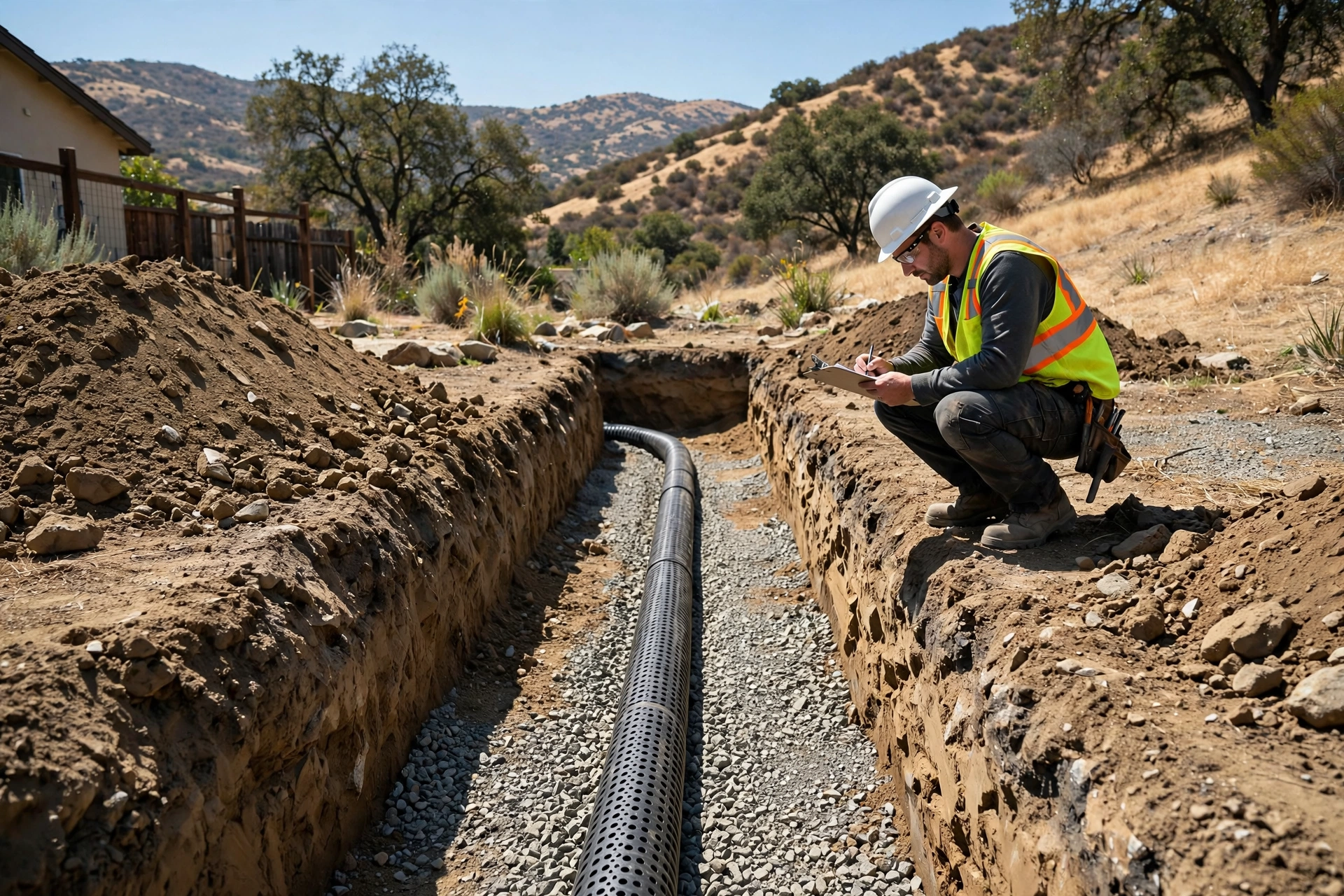
Every septic tank fills up — that's what it's designed to do, and the solids that settle at the bottom don't leave on their own. Skip pumpings long enough and those solids start escaping into the drain field, where they clog the very soil that's supposed to treat your wastewater. That's how a routine maintenance visit turns into a drain field replacement.
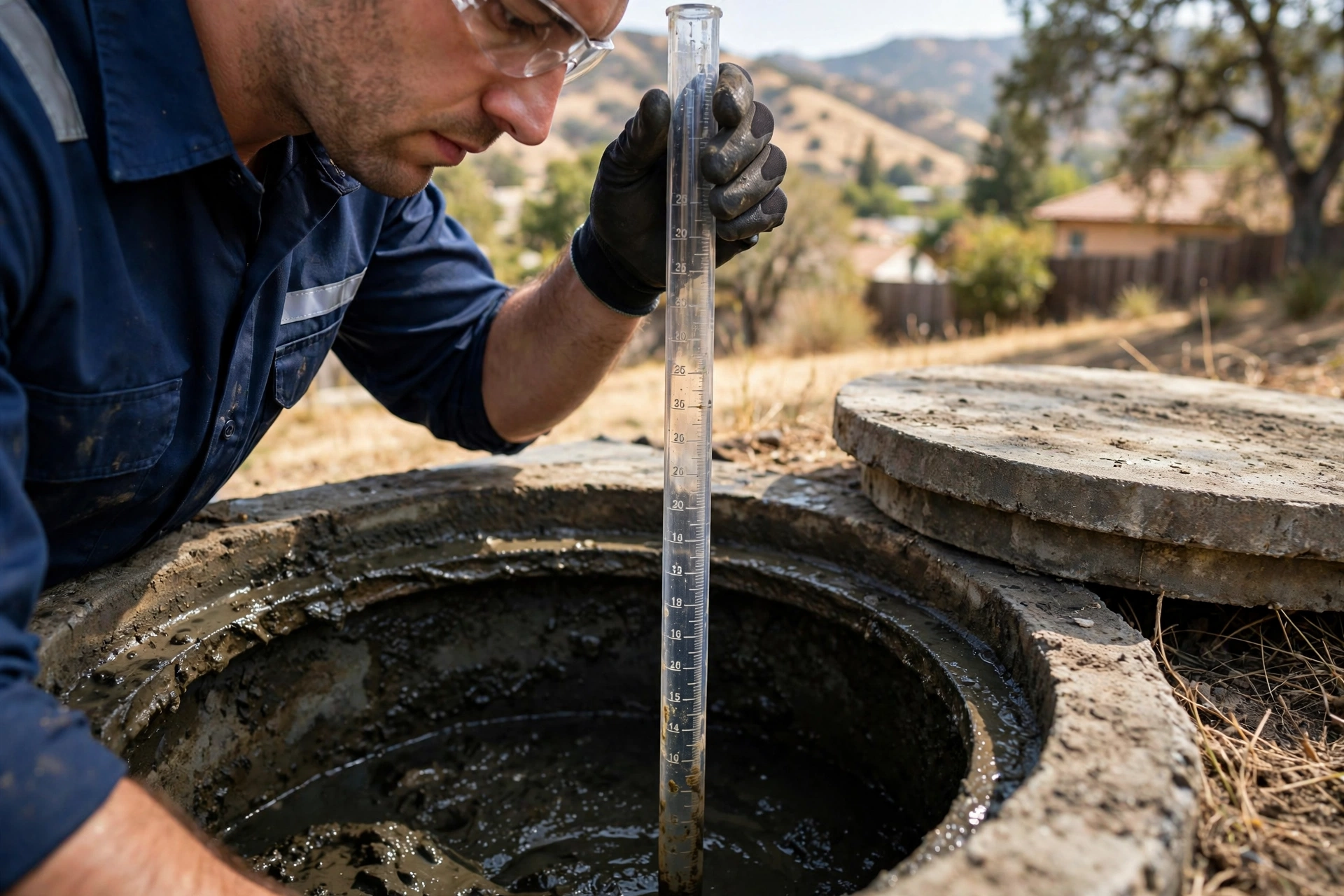
Our pumping service opens both tank lids, pumps the tank completely down, agitates and removes the sludge layer from the bottom (not just the easy liquid on top), and inspects the tank, baffles, and outlet filter while we're there. We measure the scum and sludge layers so you know exactly how your system is doing — and how long you can safely wait until the next pumping.
If it's been more than a few years, if drains are slowing down, or if you've just bought a hillside home and have no idea when the tank was last touched — call. Pumping is routine maintenance; everything it prevents is a far bigger job.
Signs your tank needs pumping
- Drains throughout the house are slow, not just one sink
- Gurgling sounds from toilets when you run the washing machine
- Sewage smells in the yard, especially over the tank or drain field area
- Toilets flush weakly or take two tries
- Wet, spongy patches in the yard above the drain field — even without rain
How we pump your tank
1 Locate and open the tank
We find both access lids — even on Monrovia lots where the lids are buried under landscaping or a hillside slope. Both lids get opened so we can see and pump the full tank, not just half of it through one lid.
2 Pump it completely down
The tank is pumped down to the bottom, including the sludge layer — we don't skim the liquid and call it done. Agitation breaks up settled solids so they come out with the rest, and the baffle and outlet filter get checked for damage or clogs.
3 Inspect while it's empty
An empty tank is the only time you can truly inspect it. We look at the walls and lid for cracks, check the baffles that keep solids out of your drain field, and measure sludge and scum so we can tell you straight how the system is holding up.
4 Close up and report
Lids go back on and get re-buried to grade. We record the tank size, condition, and location — which is exactly the information your next pumper, buyer, or the county will ask for.
Pumping on Monrovia's hillside lots
Hillside tanks in Monrovia's foothills often sit on slopes with limited truck access — our hoses reach, and we plan the job around what your lot actually looks like. Many of these lots have tanks that haven't been opened in a decade or more, because the previous owner lost track of the schedule and the county doesn't send reminders. Homes in the northern foothills also deal with shallow, rocky soil that loads the drain field harder than flat-land soil, which makes staying on schedule even more important. A tank that's overfull in this ground sends solids straight into trenches that can't absorb them.
Need septic tank pumping in Monrovia?
One call connects you with a local technician. No forms, no waiting.