Most septic failures don't start with a catastrophe — they start with a baffle that broke off, an outlet filter nobody cleaned, a distribution box that settled unevenly, or a cracked lid letting hillside runoff pour into the tank. Catch these early and they're repairs. Ignore them and they're replacements.
Our repair service starts with diagnosis: we find the actual failed component, not just the symptom. Broken baffles get replaced, clogged outlet filters get cleaned or swapped, settled distribution boxes get re-leveled, cracked lids and risers get replaced, and damaged inlet lines get repaired. We fix what's broken and tell you honestly what isn't.
Call if you're getting backups, if pumping didn't solve the problem, or if an inspection flagged issues. The worst outcome in septic is always the one that waited too long — a failed drain field costs many times what a timely component repair does.
Signs your septic system needs repair
- Backups return within months of a pumping — the tank fills too fast
- One bathroom backs up while others drain fine (a line or baffle problem)
- Loud gurgling in drains that used to be quiet
- The tank lid area sinks or collapses — structural failure
- Heavy rain causes backups that clear up when it dries out
How we repair your system
1 Diagnose the actual failure
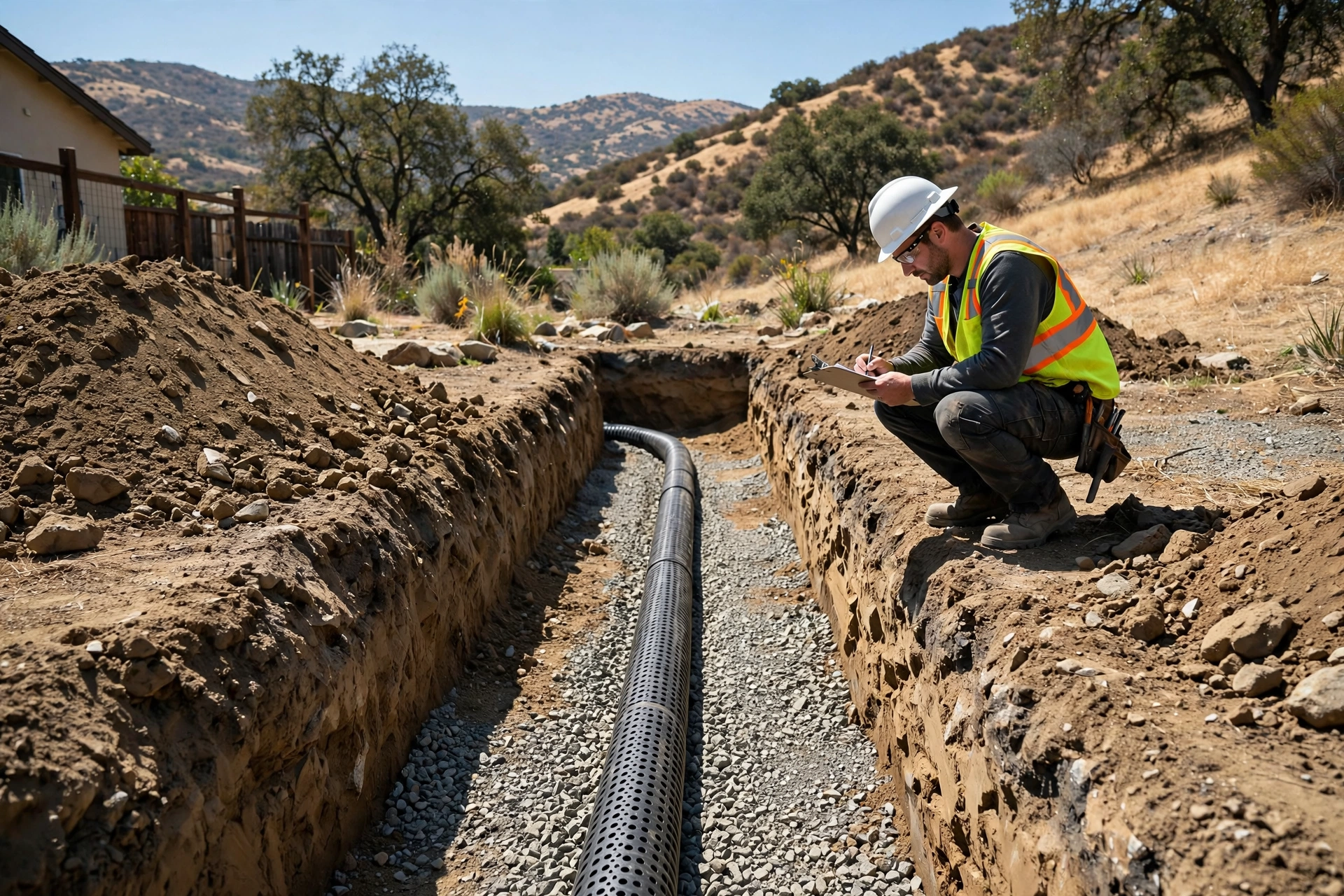
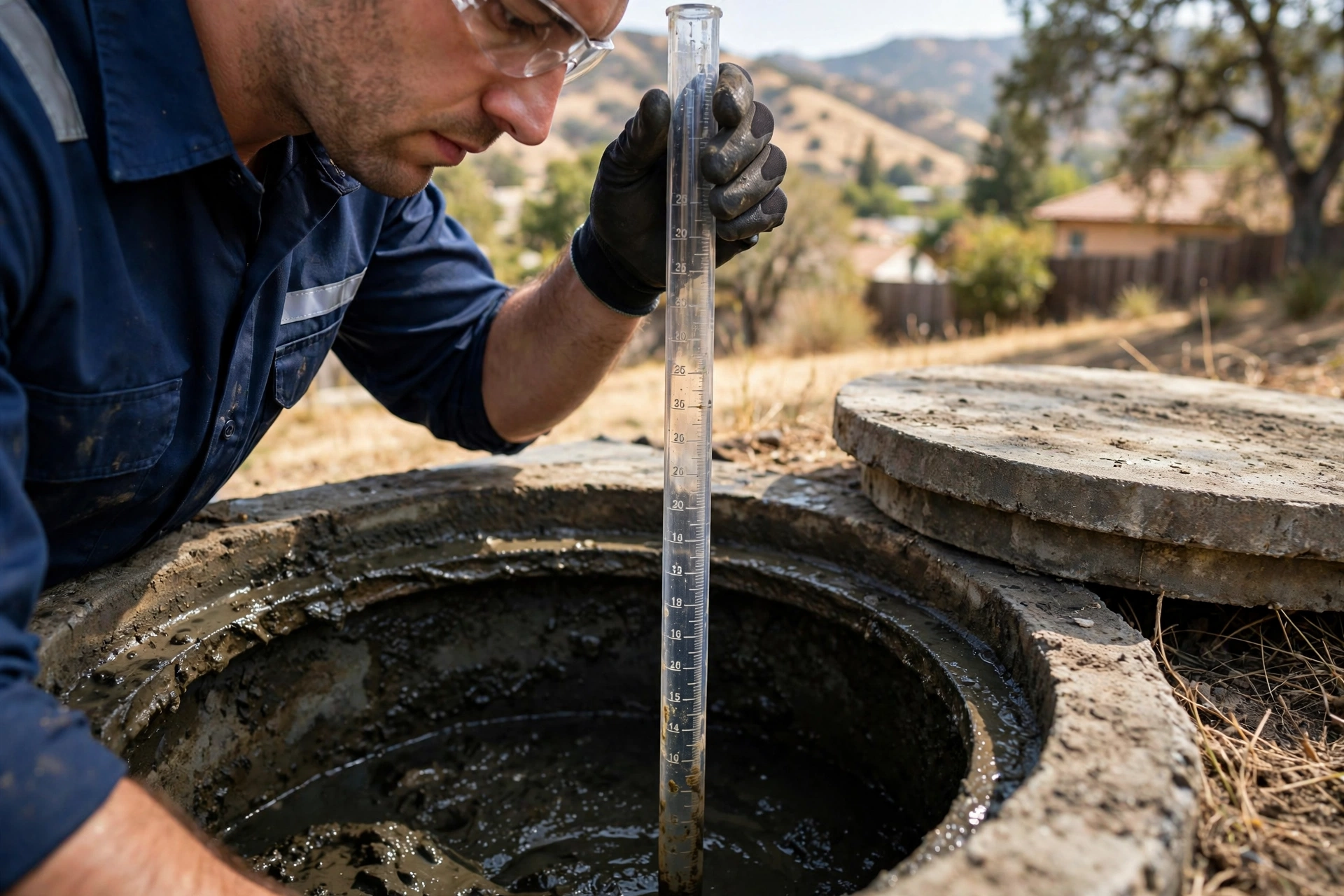
We open the tank and check the full component chain — inlet, baffles, outlet, filter, distribution box, and field. Septic symptoms overlap, so we don't replace parts until we know which one failed. Guessing is how simple jobs become expensive ones.
2 Repair the failed component
Broken baffles, cracked lids, settled D-boxes, clogged or failed outlet filters, damaged risers — we carry the parts to fix the common failures on the spot, and we tell you exactly what failed and why.
3 Test the fix under load
After the repair, we run water through the system and watch it behave — flow into the tank, flow out to the field, no backup. A repair that hasn't been tested is a hope, not a fix.
4 Tell you what comes next
We explain what the failure means for the system's remaining life. If the repair buys you years, we say so. If it's a warning sign of a field on its way out, you deserve to hear that too — planned replacement beats emergency replacement.
The repairs we see most in Monrovia
In Monrovia's foothills, the most common repair calls come from hillside-specific wear: tanks shifted by slope soil movement cracking inlet pipes, concrete lids from the 60s and 70s crumbling under decades of loading, and outlet filters that were never installed or never cleaned. Older homes with original steel tanks present a different problem — steel doesn't repair well, and we tell you that straight instead of selling you a patch. Rain season (roughly November through March) is peak failure time here: saturated ground stresses every component, and hillside runoff that reaches a compromised lid can hydraulically overload a system overnight.
Need septic system repair in Monrovia?
One call connects you with a local technician. No forms, no waiting.